About

Parish News

Christ The Redeemer (CTR) Catholic Schools Celebrates 30 Years of Faith, Learning, and Community

Christ The Redeemer (CTR) Catholic Schools Celebrates 30 Years of Faith, Learning, and Community

Christ The Redeemer (CTR) Catholic Schools Celebrates 30 Years of Faith, Learning, and Community


March 2025 – Christ The Redeemer (CTR) Catholic Schools is celebrating a significant milestone - 30 years of faith-filled education, community growth, and unwavering dedication to students and families through the gift of Catholic education.

Established in 1995, CTR Catholic was formed through the amalgamation of Okotoks RCSSD #346, Drumheller RCSSD #25, and Assumption RCSSD #50, bringing together Catholic communities that had been advocating for faith-based education for decades. While CTR Catholic has officially existed as a division for 30 years, many of its schools have even deeper roots. Assumption School in Oyen was founded in 1955, St. Anthony’s School in Drumheller in 1959, and the Catholic school system in Okotoks was formally organized in 1989 before joining the new division. Over the years, CTR Catholic has expanded, strengthening its presence in seven communities across Alberta and extending its reach through The Centre for Learning@HOME, offering virtual education, homeschooling and distance education to more than 3,000 students in communities throughout the entire province since 1989.

“Reaching this milestone is a testament to the perseverance, faith, and commitment of the many educators, families, and students who have shaped CTR Catholic over the past 30 years,” said Dr. Andrea Holowka, Superintendent of CTR Catholic Schools. “From our humble beginnings to serving thousands of students today, we remain dedicated to fostering a strong Catholic identity, academic excellence, and a deep sense of community for generations to come.”

Faith Days Celebration – Honoring 30 Years of Catholic Education


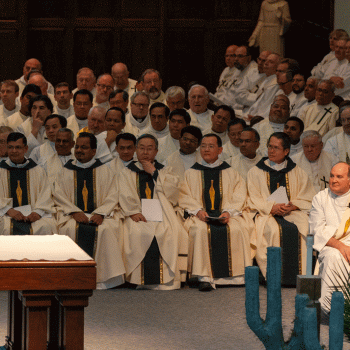
A key moment in CTR Catholic’s anniversary celebrations took place on February 18-19 in Okotoks during the division’s annual Faith Days, where all teachers and administrators gathered for faith formation and development. The event opened with Mass celebrated by Bishop William McGrattan, during which he blessed commemorative crucifixes that have since been gifted to each CTR Catholic school.

These crucifixes are crafted from olive wood from the Holy Land, contain soil from Bethlehem, stone from Jerusalem, olive leaves, frankincense, and incense from the Church of the Nativity in Bethlehem. The Fourteen Stations of the Cross are carved on the back, making each cross a lasting tribute to the faith and dedication that have shaped CTR Catholic over the past three decades.

“This gift is a tribute to the faith that has guided our journey and will continue to strengthen our schools for years to come,” said Dr. Holowka.

A Legacy of Growth and Commitment

Since its formation, CTR Catholic has continued to expand its reach, opening new schools and outreach programs to serve Alberta’s growing Catholic community. Today, CTR Catholic operates 13 traditional schools, four outreach schools, and The Centre for Learning@HOME, serving more than 10,000 students across seven communities. With over 500 teachers and 300 support staff, the division continues to provide high-quality Catholic education while adapting to the evolving needs of students and families.
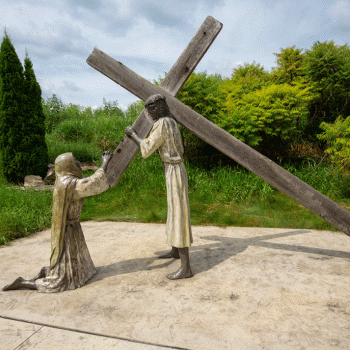
2025 Outdoor Way of the Cross

2025 Outdoor Way of the Cross

Save the date for the Outdoor Way of the Cross
Fri, Apr 18, at 8:30 am | St. Mary’s Cathedral, CalgaryJoin Bishop McGrattan and the faithful of the Diocese of Calgary for the Outdoor Way of the Cross, now returning to its Downtown route. This solemn pilgrimage invites us to walk together in prayer and reflection on the Passion of Christ, meditating on His suffering, sacrifice, and love for the world. The journey begins at St. Mary’s Cathedral at 8:30 am. All are welcome to take part in this powerful witness of faith.

Bishops raise serious concerns about threats to charitable status designation

Bishops raise serious concerns about threats to charitable status designation

On Monday, 10 March 2025, the members of the Permanent Council of the Canadian Conference of Catholic Bishops (CCCB) expressed their grave concern regarding two recommendations made by the House of Commons Standing Committee on Finance within Report 21: Pre-Budget Consultations in Advance of the 2025 Budget. These recommendations (#429 and #430), if adopted, would be profoundly detrimental to Canada’s charitable sector, because they would:

  • Revoke the charitable status of “anti-abortion organizations” (#429);
  • Amend the Income Tax Act such that “the advancement of religion” would no longer qualify as a legitimate purpose for granting charitable status. (#430)

After consulting widely, including with experts in charity law, the members of the Permanent Council sent a letter to the Hon. Dominic LeBlanc, Minister of Finance, defending the value and role of faith-based charities for Canadian society, as well as the unfairness of targeting pro-life organizations. They urged the government to abandon the two recommendations and to conduct comprehensive consultations within the charitable sector before embarking on any legislative changes that could threaten the viability of charitable organizations and adversely affect the millions of Canadians who depend on them for essential services and support.

Letters were sent to:

For the French version, visit:  

The Solemnity of the Annunciation of the Lord - March 25

The Solemnity of the Annunciation of the Lord - March 25

The Solemnity of the Annunciation of the Lord: A Celebration of Divine Invitation and Human Fiat


In the rich tapestry of the Catholic liturgical calendar, the Solemnity of the Annunciation of the Lord stands as a profound moment of grace, mystery, and celebration. Observed annually on March 25 (or the nearest Monday if it falls during Holy Week), this feast commemorates the pivotal event when the Archangel Gabriel announced to the Virgin Mary that she would conceive the Son of God by the power of the Holy Spirit. It is a day that invites the faithful to reflect on the Incarnation—the moment when God became man—and the humble yet transformative "yes" of Mary that changed the course of human history.

The Biblical Foundation

The Annunciation is rooted in the Gospel of Luke (1:26-38), where Gabriel greets Mary with the words, "Hail, full of grace, the Lord is with you." Troubled by this salutation, Mary listens as the angel reveals God’s plan: "You will conceive in your womb and bear a son, and you shall call his name Jesus. He will be great and will be called the Son of the Most High." Despite her initial perplexity—expressed in her question, "How can this be, since I have no relations with a man?"—Mary responds with faith and obedience: "Behold, I am the handmaid of the Lord. May it be done to me according to your word." With this fiat ("let it be"), the Word became flesh, and the redemption of humanity began.

From a Catholic perspective, this moment is not merely a historical event but the cornerstone of salvation. The Annunciation marks the beginning of the Incarnation, when the eternal Son of God took on human nature in the womb of the Virgin Mary, uniting divinity and humanity in a singular, unrepeatable act of love.

Theological Significance

The Solemnity of the Annunciation holds immense theological weight in Catholic doctrine. It celebrates the mystery of the Incarnation, a foundational belief articulated in the Nicene Creed: "For us men and for our salvation, he came down from heaven, and by the Holy Spirit was incarnate of the Virgin Mary, and became man." This feast underscores the dignity of human life, as God Himself chose to enter the world as an embryo, sanctifying the womb and affirming the sacredness of every human being from conception.

Moreover, the Annunciation highlights Mary’s unique role in salvation history. Declared "full of grace" by Gabriel, she is understood in Catholic theology as the Immaculate Conception—preserved from original sin from the moment of her own conception to be a fitting vessel for the Son of God. Her free and willing consent exemplifies perfect discipleship, making her the model for all Christians who are called to surrender to God’s will.

Liturgical Observance

In the Catholic Church, the Solemnity of the Annunciation is a day of joy and reverence. Because it typically falls during Lent—a season of penance—the feast offers a burst of light amid the somberness, reminding the faithful of the hope of redemption. The liturgy features white vestments, symbolizing celebration, and includes readings from Scripture such as Isaiah 7:10-14 (the prophecy of a virgin bearing a son named Emmanuel) and the Lucan account of the Annunciation. The Angelus prayer, recited daily by many Catholics, takes on special resonance on this day, as it recalls Gabriel’s message and Mary’s response.

Interestingly, the date of March 25 also carries a traditional connection to the Crucifixion. Early Church Fathers calculated that Christ’s death occurred on the same day as His conception, linking the Annunciation to the Paschal Mystery and emphasizing the unity of Christ’s life from beginning to end.

A Call to Reflection

For Catholics, the Solemnity of the Annunciation is an invitation to ponder several enduring truths. First, it reveals God’s humility and love—He did not impose His will but sought the cooperation of a young woman from Nazareth. Second, it showcases Mary’s radical trust and obedience, inspiring believers to echo her fiat in their own lives, even amid uncertainty. Finally, it calls attention to the sanctity of life, as the Church reflects on the moment when Jesus, fully God and fully man, began His earthly existence.

In a world often marked by noise and distraction, the Annunciation offers a quiet yet powerful lesson: God enters human history not with fanfare, but through the stillness of a virgin’s womb and the courage of her "yes." As Pope St. John Paul II wrote in his encyclical Redemptoris Mater, "The Annunciation is the beginning of that 'fullness of time' which marks the fulfillment of God’s promises and preparations." It is a moment that continues to resonate, drawing the faithful into the mystery of a God who became one of us.

Living the Annunciation Today

Catholics are encouraged to celebrate this solemnity not only through liturgy but also through personal devotion. Praying the Rosary, particularly the Joyful Mysteries, meditating on the Annunciation, or reciting the Angelus can deepen one’s connection to this event. It is also a day to renew commitment to life, echoing the Church’s teaching on the dignity of every human person from conception.

In essence, the Solemnity of the Annunciation of the Lord is a celebration of divine initiative and human response—a moment when heaven met earth, and salvation took root. For Catholics, it is a reminder that God still calls each person to participate in His plan, waiting patiently for our own "let it be" to bring His light into the world.

Interesting Traditions of Lent

Interesting Traditions of Lent

Lent, the 40-day period leading up to Easter in the Christian calendar, is a time of reflection, penance, and preparation. It’s rooted in the biblical account of Jesus fasting for 40 days in the wilderness. Over centuries, various traditions have emerged—some solemn, some quirky, and many shaped by local cultures. Here are a few that stand out:

Fasting and Abstinence:

The classic Lenten practice is giving something up—originally meat, dairy, and eggs in many traditions, which is why you’ll still hear about "fish Fridays" in Catholic communities. People now often ditch chocolate, coffee, or social media instead. The idea is sacrifice, mirroring Jesus’ deprivation, though the modern spin can feel more like a spiritual New Year’s resolution.

Shrove Tuesday/Pancake Day:

The day before Lent starts (Ash Wednesday), folks historically used up rich foods like eggs and butter—enter pancakes. In the UK, it’s a legit event with pancake races where people flip them while running. In France, it’s Mardi Gras ("Fat Tuesday"), a last hurrah of indulgence before the austerity kicks in.

Ash Wednesday Ashes:

Kicking off Lent, some Christians get ash on their foreheads in a cross shape, made from burned palm leaves from the previous year’s Palm Sunday. It’s a memento mori—“remember you will die”—paired with a call to repent.

Pretzels as Prayer: 

In medieval Europe, monks supposedly invented pretzels as a Lenten snack. No eggs or dairy, just flour, water, and salt, twisted into a shape mimicking arms crossed in prayer. It’s a stretch (pun intended), but a fun origin story for a snack still tied to the season.

Carnival: 

Before the restraint of Lent, places like Brazil, Venice, and New Orleans throw massive pre-Lent bashes—Carnival or Carnevale, from the Latin "carne vale," meaning "farewell to meat." Masks, parades, and excess flip the script on the sobriety to come.

Burying the Alleluia: 

In some liturgical traditions, the word "Alleluia" gets ceremonially dropped from hymns and services during Lent, sometimes "buried" symbolically (like writing it on paper and sticking it in a box) until Easter. It’s a quiet way to mark the mood shift.

Spring Cleaning: 

In parts of Eastern Europe, Lent doubles as a time to scrub the house top to bottom. The physical purge aligns with the spiritual one—out with the old, in with the renewed. It’s practical and symbolic, though not exactly a party.

Passion Plays: 

Around Holy Week (the last week of Lent), communities—especially in places like Germany or the Philippines—stage dramatic reenactments of Jesus’ trial and crucifixion. Some get intense, with real nails in extreme cases (looking at you, Filipino devotees), though most keep it theatrical.

Each tradition reflects a mix of faith, history, and human creativity. They’re less about rigid rules today and more about what resonates with people.

Jubilee Year Plenary Indulgence

Jubilee Year Plenary Indulgence

Picture

Bishop William T. McGrattan released a decree on Feb. 24, 2025 outlining how the faithful in the Diocese of Calgary can obtain Plenary Indulgences during the Jubilee Year 2025.

DOWNLOAD DECREE


A Plenary Indulgence may be received in the Diocese of Calgary by doing the following during the period from December 29, 2024 through December 31, 2025:
​
At least once during the Holy Year:

  • Receive sacramental confession and absolution
  • Receive Holy Communion


And, while striving to be free from attachment to sin, carry out any of the following:
​

  1. Make a pilgrimage visit, whether individually or as a group (family, parish, co-workers, etc.), to either St. Mary’s Cathedral, Calgary, or The Shrine Church of Our Lady of the Rockies, Canmore, and while visiting those sites take time for prayer specifically for the intentions of the Holy Father.
    ​
  2. Make a pilgrimage visit to St. John the Evangelist Ordinariate Parish, Calgary, and while visiting this church take time for prayer specifically for the intentions of the Holy Father.
  3. Attend any of the Masses with Apostolic Blessing by Bishop William T. McGrattan on: 
    1. March 19, Solemnity of St. Joseph, Spouse of the Blessed Virgin Mary, at St. Mary’s Cathedral, Calgary
    2. August 22, Memorial of the Queenship of the Blessed Virgin Mary at the Shrine Church of Our Lady of the Rockies, Canmore
    3. December 8, Solemnity of the Immaculate Conception of the Blessed Virgin Mary at St. Mary’s Cathedral, Calgary
  4. Those who are truly repentant of sin, but who cannot participate in diocesan pilgrimages, can receive the Jubilee Indulgence by prayerfully reciting the Our Father and any approved version of the Profession of Faith (Creed), and also praying for the intentions of the Holy Father. Those who are homebound due to age, illness, imprisonment, etc., may also offer up their suffering as a prayer for others and/or for the poor souls in purgatory.
  5.  Visit for an appropriate amount of time family members, neighbours or friends who are in need (such as the sick, lonely elderly people, the disabled, prisoners, etc). This visit is to be made with a vibrant awareness of Christ’s presence in these persons in need.
  6.  Carry out personal acts of penance for an entire day (particularly Fridays), such as:
    - Abstain from eating meat
    - Abstain from futile distractions (such as entertainment, social media, etc.)
    - Abstain from unnecessary consumption of food or drink (fasting)
  7.  Carry out significant acts of charity such as:
    - Contribute to the poor
    - Support the homeless, the orphan, the migrant or refugee, etc.
    - Contribute a significant amount of one’s free time to worthy volunteer activities in support of human life and dignity

During the Jubilee Year an individual may receive one Plenary Indulgence per day, and may apply that indulgence to themselves or to a deceased person. 

Address

206-9th Avenue West
High River, AB T1V 1A4

Talk to us

(403) 652 2203
(403) 601 3886