About

Parish News

SFDS Helping Hands

SFDS Helping Hands

Report for the months of January—April 2025 The St. Francis de Sales Ministry has helped a total number of 11 people for the months of January to April 2025. We paid out a total of $15,321.51 for bills, rent, or mortgages, as well, we gave a total of $1125.00 in fuel cards and $2200.00 in grocery cards. The total assistance we have given this period is $18,646.51 It is rewarding to be able to assist these people who are genuinely struggling. The help we give is so appreciated. We try to listen and give help as much as we can as quickly as possible.
A huge Thank You to all those who have made a donation to this rewarding ministry.

Palm Sunday

Palm Sunday

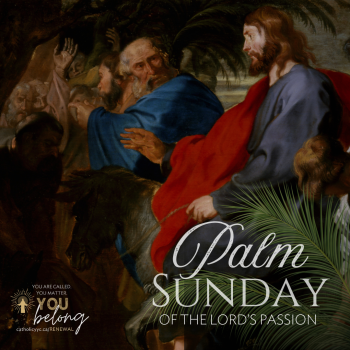
Palm Sunday marks the beginning of Holy Week in the Christian calendar, commemorating Jesus Christ's triumphal entry into Jerusalem, an event described in all four Gospels of the New Testament (Matthew 21:1-11, Mark 11:1-11, Luke 19:28-44, and John 12:12-19). It occurs the Sunday before Easter, and in 2025, it will fall on April 13, given that Easter Sunday is April 20.

Historical Background

The origins of Palm Sunday trace back to the life of Jesus, around 30-33 CE, when he entered Jerusalem riding a donkey, fulfilling the prophecy of Zechariah 9:9: "Rejoice greatly, Daughter Zion! See, your king comes to you, righteous and victorious, lowly and riding on a donkey." Crowds greeted him by waving palm branches and laying them on the ground, shouting "Hosanna," which means "save us" in Hebrew. This act symbolized victory, peace, and the recognition of Jesus as the Messiah. However, this triumphant moment was bittersweet, as it preceded his betrayal, arrest, and crucifixion later that week.

The celebration of Palm Sunday as a formal liturgical event developed in the early Christian Church. By the 4th century, pilgrims in Jerusalem reenacted Jesus’ entry during Holy Week, a practice documented by the Spanish nun Egeria in her travelogue around 381-384 CE. The tradition spread from Jerusalem to other Christian communities, becoming a widespread observance by the Middle Ages. In the Catholic Church, it evolved into a day of both joy and solemnity, reflecting the dual nature of Christ’s entry as a king destined for sacrifice.

Catholic Observance and Meaning

For Catholics, Palm Sunday—officially called "Palm Sunday of the Passion of the Lord"—holds deep spiritual significance. The day begins with a blessing of palm branches (or other local greenery, like olive or willow branches, depending on the region). These blessed palms are distributed to the faithful, who often process into the church, recalling Jesus’ entry into Jerusalem. The Mass includes two Gospel readings: one recounting the triumphal entry and a longer "Passion Narrative" detailing Jesus’ suffering and death, emphasizing the shift from celebration to sacrifice.

The palms symbolize several things:

  • Victory and Triumph: They echo the ancient use of palms as symbols of victory in Jewish and Roman cultures, signifying Jesus’ spiritual kingship.
  • Peace: Jesus’ choice of a donkey over a warhorse highlights his mission of peace rather than earthly conquest.
  • Martyrdom and Sacrifice: The joy of Palm Sunday is tempered by the awareness of Christ’s impending Passion, linking the palms to his ultimate victory over sin and death through the cross.

Catholics often keep blessed palms in their homes, sometimes braided into crosses, as a reminder of Christ’s sacrifice and a sacramental symbol of grace. The ashes used on Ash Wednesday the following year are often made by burning these palms, connecting the start of Lent to its culmination in Holy Week.

In essence, Palm Sunday invites Catholics to reflect on Jesus as a humble king who willingly embraced suffering for humanity’s salvation. It’s a day of paradox—celebration intertwined with sorrow—setting the stage for the mysteries of Good Friday and the joy of Easter.
The Sacred Paschal Triduum

The Sacred Paschal Triduum

The term "Holy Triduum" (often spelled with a capital "H") refers to a sacred three-day period in the Christian liturgical calendar, specifically the three days that encompass the Passion, Death, and Resurrection of Jesus Christ. It is the culmination of Lent and the most significant time in the Christian year for many denominations, particularly Roman Catholics, Anglicans, and Lutherans. The word "Triduum" comes from Latin, meaning "three days" (tri = three, dies = days).

Historical Background

The Holy Triduum has its roots in early Christian practices that commemorated the events of Jesus’ final days as described in the New Testament. By the 4th century, with the legalization of Christianity under Emperor Constantine and the development of formalized liturgies, these observances became more structured. The Triduum emerged as a distinct celebration, tying together three key moments:

  1. Maundy Thursday - commemorating the Last Supper and Jesus washing the disciples' feet.
  2. Good Friday - marking the Crucifixion and Death of Jesus.
  3. Holy Saturday - a day of waiting and preparation for the Resurrection, culminating in the Easter Vigil.

Historically, these events were not always celebrated as a unified "Triduum." Early Christians focused on Easter (Pascha) as the central feast, with Good Friday and Holy Saturday gradually gaining prominence. By the Middle Ages, the Roman Rite formalized the Triduum as a three-day liturgical unit, a practice that was further refined during the Council of Trent (16th century) and later in the 20th century with reforms like those of Pope Pius XII in 1955, which restored the Easter Vigil to its nighttime prominence.

Meaning of the Holy Triduum

The Holy Triduum is considered a single, continuous celebration rather than three separate days. It begins with the evening Mass of the Lord’s Supper on Maundy Thursday and concludes with Easter Sunday evening (though technically, the Triduum proper ends with the Easter Vigil on Saturday night). Each day has its own distinct focus:

  1. Maundy Thursday
    • Meaning: Named from the Latin "mandatum" (commandment), it recalls Jesus’ new commandment to "love one another as I have loved you" (John 13:34). The washing of feet symbolizes humility and service, while the institution of the Eucharist at the Last Supper is central to Christian worship.
    • Ritual: The Mass ends with the stripping of the altar, symbolizing Jesus’ abandonment, and the Eucharist is moved to an "altar of repose" for adoration.
  2. Good Friday
    • Meaning: A somber day focused on the suffering and sacrificial death of Jesus on the cross, seen as the atonement for humanity’s sins. It’s a day of penance, fasting, and reflection.
    • Ritual: No Mass is celebrated (unique in the year). Instead, services include the reading of the Passion, veneration of the cross, and distribution of pre-consecrated Communion.
  3. Holy Saturday (and the Easter Vigil)
    • Meaning: A day of silence and anticipation, representing Jesus in the tomb. The Easter Vigil, held after nightfall, celebrates the Resurrection, marking the transition from death to life and the triumph of light over darkness.
    • Ritual: The Vigil includes the lighting of the Paschal candle, the Exsultet (Easter Proclamation), baptisms, and the first Easter Mass. It’s a joyous shift from mourning to celebration.

Theological Significance

The Triduum encapsulates the Paschal Mystery—the core of Christian belief: Christ’s suffering, death, burial, and resurrection. It’s a time for believers to enter into these mysteries through liturgy, prayer, and fasting, reflecting on salvation and renewal. The three days are not merely historical remembrances but a living participation in the events that define Christian faith.

In 2025, with the current date being April 13, the Holy Triduum will occur later this month, as Easter Sunday is calculated as the first Sunday after the first full moon of spring (April 20 in 2025), placing the Triduum from April 17 (Maundy Thursday) to April 19 (Easter Vigil).

HSA Room Dedication

HSA Room Dedication

In celebration of our school's 30th anniversary, we are looking to name our classrooms in honor of the Saints. With a donation to Holy Spirit Academy, you can choose the Saint's name for one of our classrooms and offices.

You can also donate in memory of a loved one. Our goal is to use the money fundraised for future faith events in our building, celebrating the gift of Catholic education in our community.
Please call Holy Spirit Academy at 403-652-2889 If you are interested in participating in this.

Easter Decorating

Easter Decorating

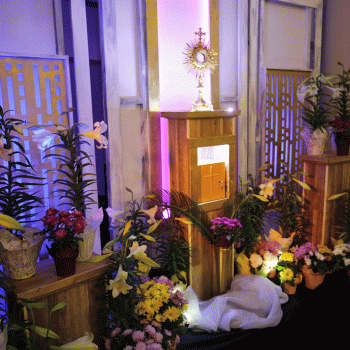
Get ready to celebrate Easter in style! Our incredible Decorating Team is gearing up to transform our church into a vibrant, joy-filled space, and they’d love your help to make it extra special! We’re warmly inviting you to contribute by donating Easter Lilies, Easter Mums, or a cheerful monetary gift to help them bring the beauty of the season to life.

Want to join in the fun? If you’re giving a monetary donation, please swing by the church office with your contribution by April 11. If you’re bringing Lilies or Mums, we’d be thrilled to receive them at the church by April 14. Your generosity will make our Easter celebration bloom with love and hope!

Have questions? Reach out to our wonderful Nancy in the church office at 403-652-2203—she’d be delighted to chat with you. Let’s come together to make this Easter unforgettable!

CWL Easter Basket Sales

CWL Easter Basket Sales

St. Francis de Sales CWL Easter Basket Sales

Once again, the CWL is having our Easter Basket Ticket Sale fundraiser. We have 4 beautiful baskets, two adults and two children’s. Ticket Sales commence on the following dates: Saturday, March 22, 2025, to Sunday, April 6, 2025, after all Masses in the Church Hall. The draw will be made on Palm Sunday, April 12, 2025.

Cost of tickets:

$5.00 each or 3 for $10.00. You can purchase tickets at the church after Masses or by E-Transfer.
E-transfer works as follows:

  • You must purchase a minimum of $10.00 worth of tickets.
  • You can send your e-transfer to “This email address is being protected from spambots. You need JavaScript enabled to view it.".

Please indicate in the message area of the transfer your phone # and your ticket distribution (i.e. 3 adults or 1 adult and 2 children) All proceeds will be donated to a local charity in our community, High River.

Thank you so much for your support for these very worthwhile causes.

Blessings,

The CWL Committee:

Barb Wiszt, Geraldine Gervais, Susan Horn, Bae Taylor

Address

206-9th Avenue West
High River, AB T1V 1A4

Talk to us

(403) 652 2203
(403) 601 3886