About

Parish News

Patti Keats R.I.P.

Patti Keats R.I.P.

It is with great sadness we are announcing that Patti Keats, a long time parishioner of St. Francis de Sales, and resident of Seasons HR passed away on April 24th, 2025 Lee Amlin and her team at Seasons HR have been providing exemplary faith support for Patti for a number of years A Funeral Mass will be held at a later date.image

Memorial Mass for Pope Francis - High River

Memorial Mass for Pope Francis - High River

A Memorial Mass for the Intention of Pope Francis
“Precious in the sight of the Lord is the death of His faithful ones.” – Psalm 116:15

Fr. Mariusz invites you to join in a special Memorial Mass to offer prayers for the repose of the soul of Pope Francis on Friday, May 2, 2025 at 9:15 AM at St. Francis de Sales Parish.

Together, let us give thanks for the life, witness, and shepherding heart of Pope Francis, entrusting him to the mercy and peace of our loving God.

In the spirit of faith and unity, let us gather as a community to lift our hearts in prayer.
Your presence will be a blessing. All are welcome.

Memorial Mass for Pope Francis - Calgary

Memorial Mass for Pope Francis - Calgary

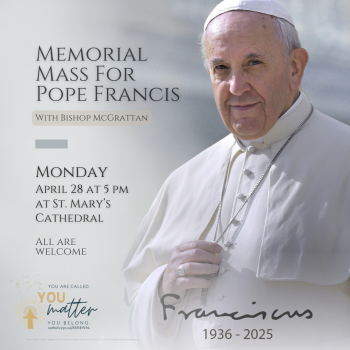
Bishop William T. McGrattan will celebrate a Memorial Mass for the repose of the soul of Pope Francis at 5 pm on Monday, April 28, at St. Mary’s Cathedral. All are invited to attend!

Divine Mercy Sunday

Divine Mercy Sunday

Divine Mercy Sunday: A Celebration of God’s Infinite Mercy 3:00 PM

Introduction

Divine Mercy Sunday, observed on the second Sunday of Easter, is a profound Catholic feast that celebrates the boundless mercy of God as revealed through Jesus Christ. Rooted in the private revelations of St. Faustina Kowalska, a Polish nun in the 1930s, this feast has become a cornerstone of modern Catholic spirituality. In a world often marked by division, suffering, and despair, Divine Mercy Sunday offers a message of hope, forgiveness, and renewal that resonates deeply today.

Origins of Divine Mercy Sunday

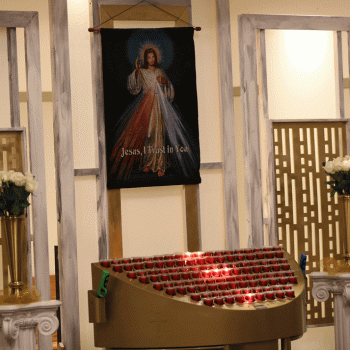
The origins of Divine Mercy Sunday trace back to St. Faustina’s mystical encounters with Jesus, who appeared to her with a message of mercy for all humanity. In her diary, Divine Mercy in My Soul, Faustina recorded Jesus’ request for a special feast to honor His mercy, to be celebrated on the Sunday after Easter. He instructed her to promote the Divine Mercy image—depicting Him with red and white rays symbolizing blood and water—and the Divine Mercy Chaplet, a prayer for God’s mercy on the world.

Jesus promised extraordinary graces for those who participate in the feast, particularly through sacramental confession and receiving Holy Communion on Divine Mercy Sunday. He described this grace as a “complete forgiveness of sins and punishment,” akin to the cleansing of baptism. In 2000, Pope John Paul II canonized St. Faustina and officially instituted Divine Mercy Sunday for the universal Church, fulfilling Jesus’ request and affirming the feast’s significance.

The Spiritual Significance of Divine Mercy Sunday

Divine Mercy Sunday is a powerful reminder of God’s infinite love and forgiveness, especially for sinners. The feast aligns with the Easter season’s focus on Christ’s resurrection and victory over sin, amplifying its message of redemption. Through the practices associated with the day—praying the Divine Mercy Chaplet, venerating the Divine Mercy image, and participating in the sacraments—Catholics are invited to trust in God’s mercy, seek reconciliation, and extend compassion to others.

The promise of complete forgiveness is a unique aspect of the feast, offering believers an opportunity for spiritual renewal. This grace is not merely a theological concept but a lived experience that encourages Catholics to approach God with confidence, knowing that no sin is beyond His mercy. The feast also calls for acts of mercy, both spiritual and corporal, urging individuals to reflect God’s love in their interactions with others.

Why Divine Mercy Sunday Matters Today

In today’s world, the message of Divine Mercy Sunday is more relevant than ever. We live in an era of rapid change, where conflicts, moral challenges, and personal struggles can lead to feelings of hopelessness and isolation. The feast counters these realities with a radical message: God’s mercy is limitless, and His love is available to all, regardless of their past.

  1. A Call to Healing and Reconciliation: In a polarized society, Divine Mercy Sunday invites individuals to seek forgiveness and reconcile with God and one another. The emphasis on confession and Communion provides a pathway to heal broken relationships and restore inner peace.
  2. A Source of Hope: The promise of mercy offers hope to those burdened by guilt, shame, or despair. By trusting in God’s forgiveness, individuals can find the strength to overcome personal struggles and embrace a renewed sense of purpose.
  3. A Challenge to Act with Mercy: The feast challenges Catholics to embody mercy in their daily lives—through acts of kindness, forgiveness, and service to those in need. In a world grappling with injustice and suffering, this call to mercy is a powerful witness to the Gospel.
  4. A Universal Message: While rooted in Catholic tradition, the message of Divine Mercy transcends denominational boundaries. It speaks to the universal human need for love, forgiveness, and connection, making it a beacon of light for people of all backgrounds.

Celebrating Divine Mercy Sunday

Catholics celebrate Divine Mercy Sunday through various devotions that deepen their encounter with God’s mercy. Parishes often hold special Masses, adoration of the Blessed Sacrament, and communal recitations of the Divine Mercy Chaplet. The Divine Mercy image is prominently displayed, serving as a visual reminder of Christ’s love. Many also prepare for the feast by going to confession in the days leading up to it, ensuring they approach the day with a heart open to God’s grace.

This coming Sunday, we will have a special celebration with the Exposition of the Blessed Sacrament and the Divine Mercy Chaplet prayer at 3:00 PM. I warmly invite everyone to join us in this beautiful devotion, as we come together to honor God’s mercy and seek His grace in our lives.

Beyond formal observances, Divine Mercy Sunday inspires a way of life. It encourages believers to cultivate a “mercy mindset,” approaching others with compassion and humility. Whether through forgiving a grudge, helping a neighbor, or praying for those in need, the feast invites Catholics to become instruments of God’s mercy in the world.

Conclusion

Divine Mercy Sunday is more than a liturgical celebration; it is a transformative encounter with the heart of the Gospel. In a time when humanity yearns for healing, hope, and unity, the feast offers a timeless message: God’s mercy is greater than any sin, and His love is the answer to our deepest needs. By embracing the graces of Divine Mercy Sunday, Catholics are empowered to live as disciples of mercy, bringing light to a world in desperate need of compassion. As St. Faustina wrote, “Mankind will not have peace until it turns with trust to My mercy.” Today, this call to trust remains as urgent and vital as ever.

What happens next?

What happens next?

Pope Francis died on April 21, 2025, triggering a series of traditional and procedural events within the Vatican to mourn his passing and select a successor. Here’s what happens next, based on established Catholic Church protocols and recent updates:

  1. Confirmation and Initial Rites: The death has already been confirmed by the Vatican’s health department director, Dr. Andrea Arcangeli, and the camerlengo, Cardinal Kevin Farrell. Farrell has sealed the papal apartments and destroyed the Pope’s Fisherman’s Ring and lead seal, symbolizing the end of Francis’ papacy. These actions prevent unauthorized use of papal authority.
  2. Public Viewing and Mourning: Pope Francis’ body is prepared and dressed in papal vestments, placed in a simple wooden and zinc coffin (per his request for a simplified rite), and lies in state at St. Peter’s Basilica starting April 23, 2025, for public viewing. Hundreds of thousands of mourners, including world leaders, are expected to pay their respects. The nine-day mourning period, called the Novendiale, began after his death, rooted in ancient Roman tradition.
  3. Funeral: As mandated by Church rules, the funeral is scheduled for Saturday, April 26, 2025, in St. Peter’s Square, four to six days after his death. It will be a public event led by the dean of the College of Cardinals, Giovanni Battista Re, with a simplified liturgy per Francis’ wishes, emphasizing his role as a humble bishop rather than a worldly figure.
  4. Burial: Unlike most popes buried in the Vatican Grottoes, Francis requested burial at the Basilica of Santa Maria Maggiore in Rome, the first pope to be interred outside the Vatican in over a century. His coffin will contain coins from his papacy and a rogito, a document summarizing his life and works.
  5. Papal Interregnum (Sede Vacante): The period between Francis’ death and the election of a new pope, known as the Sede Vacante, is underway. The College of Cardinals, led by the camerlengo, oversees limited administrative functions, but no major Church decisions are made.
  6. Conclave to Elect a New Pope: The conclave, where 135 cardinal electors (under 80 years old) choose the next pope, must begin between May 5 and May 10, 2025, 15–20 days after Francis’ death, though it could start earlier if cardinals agree, per changes made by Pope Benedict XVI. Held in the Sistine Chapel, cardinals are isolated, voting in secret until a candidate secures a two-thirds-plus-one majority (90 votes). Ballots are burned after each round, with black smoke signalling no decision and white smoke indicating a new pope. The process typically takes a few days but can last longer.
  7. Announcement and New Papacy: Once elected, the new pope is asked if he accepts and chooses a papal name. The dean of the College of Cardinals announces “Habemus Papam” (“We have a Pope”) from the balcony of St. Peter’s Basilica, introducing the new pontiff, who blesses the crowd. The new pope then begins his papacy, addressing global issues facing the Church’s 1.4 billion Catholics.
Pope Francis R.I.P.

Pope Francis R.I.P.

Dear Brothers and Sisters in Christ,

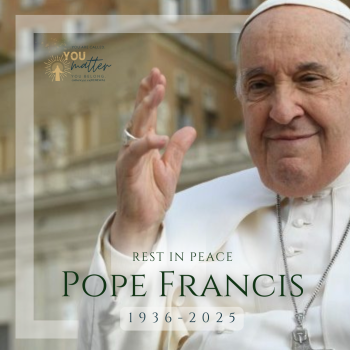
It is with profound sorrow and solemn reverence that I share the news of the passing of our Holy Father, Pope Francis, who was called home to the Lord on Easter Monday.

In God’s mysterious providence, the Pope’s earthly journey came to an end on the very day we continued to celebrate the Resurrection — a reminder to us all that death is not the final word. Just as Christ rose triumphant from the tomb, we trust and believe that Holy Father now shares in the fullness of life promised to all who follow Him faithfully.

Pope Francis led the Church with humility, compassion, and an unwavering commitment to the Gospel. His voice became one of peace in a restless world, his actions a testimony of mercy and care for the most vulnerable among us. He invited us to see Christ in every person — especially the poor, the forgotten, and the marginalized. His papacy was a call to simplicity, joy, and authentic discipleship.

As we mourn his loss, I invite you to join in prayer for the repose of his soul, and to gather in spiritual unity as the Church enters a time of mourning and transition.

May Pope Francis now rest in the peace of the Risen Lord, whom he served. And may we, as members of the Body of Christ, continue the mission to bring the light of the Gospel into every corner of the world.

Eternal rest grant unto him, O Lord, and let perpetual light shine upon him.

In the hope of the Resurrection,

Fr. Marius Sztuk, SDS

Address

206-9th Avenue West
High River, AB T1V 1A4

Talk to us

(403) 652 2203
(403) 601 3886