About

Parish News

Penitential Service - 18 of December

Confession, or the Sacrament of Reconciliation, remains essential today for several reasons despite the challenges and distractions of modern life:

1. Reconnecting with God:

  • In a world that often emphasizes self-sufficiency, confession reminds us of our dependence on God's mercy and grace.
  • It helps restore and deepen our relationship with God when it has been damaged by sin.

2. Cleansing the Soul:

  •   Sin burdens our hearts and minds. Confession provides a way to unburden ourselves, receive forgiveness, and experience spiritual renewal.

3. Developing Self-Awareness:

  •   Through the examination of conscience, we reflect on our actions and choices, becoming more aware of how we align—or fail to align—with God's will.
  •   This practice fosters personal growth and moral clarity, especially in a world filled with moral ambiguities.

4. Healing Relationships:

  •   Confession helps us acknowledge how our sins affect others and strengthens our resolve to repair broken relationships.
  •   It promotes forgiveness, both from God and from ourselves, which is crucial for emotional and spiritual health.

5. Guidance and Accountability:

  •   The sacrament provides an opportunity to seek guidance from a priest, who acts as a spiritual mentor.
  •    In today's isolated and individualistic culture, this accountability can help us stay on the path of holiness.

6. Receiving Grace for Strength:

  • Confession imparts sacramental grace, which helps us resist future temptations and grow in virtue.
  • It equips us to face the unique challenges of our time, such as materialism, digital distractions, and social divisions.

7. Countering Modern Cynicism:

  • In a world often marked by cynicism and despair, confession offers hope. It reminds us that no sin is too great for God's mercy.
  • It combats the idea that morality is relative, affirming the unchanging truth of God’s love and justice.

Why Now More Than Ever?

  •    Pace of Life: With the fast pace of modern life, we risk becoming disconnected from our spiritual needs.
  •    Cultural Challenges: Issues like moral relativism, consumerism, and the normalization of sin make it easy to stray from God’s path.
  •    Mental Health: Confession’s healing power can complement efforts to address guilt, shame, and anxiety, offering peace that only God can give.

In essence, confession today is not just about seeking forgiveness—it is about embracing a transformative encounter with God's mercy, which is profoundly needed in our complex and often fractured world.
The Feast of the Immaculate Conception 8 of December

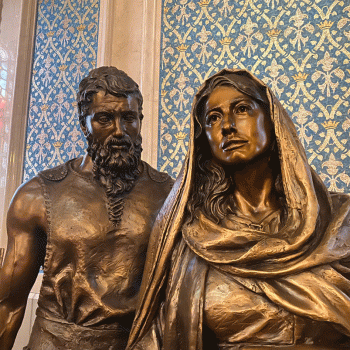
The Feast of the Immaculate Conception 8 of December

The roots of the celebration of the Immaculate Conception can be traced back to early Christian thought and devotion. The concept of Mary's purity and sinlessness was widely believed among early Christians, particularly in the writings of the Church Fathers. St. Ephrem the Syrian (4th century) and St. Augustine (5th century) described Mary as the "New Eve," free from sin and a pure vessel chosen by God.  

In the Eastern Church, by the 7th century, there was already a feast known as the "Conception of St. Anne", which honored the conception of Mary by her mother, Saint Anne. This celebration emphasized the special role Mary played in God’s plan of salvation. The feast gradually spread to the Western Church, especially gaining popularity in England by the 11th century, where it was known as the "Feast of the Conception of Mary."  

Throughout the Middle Ages, the doctrine faced theological scrutiny and debate. The central question revolved around original sin: How could Mary be conceived without it when all humanity, according to St. Paul, inherits this condition?  

St. Bernard of Clairvaux and St. Thomas Aquinas initially expressed reservations, believing that Christ's redemptive act applied universally and equally.  

- However, Blessed John Duns Scotus, a Franciscan theologian in the 13th century, introduced the concept of "preservative redemption." He proposed that Mary was preserved from original sin by the merits of Christ’s future sacrifice. This idea gained widespread acceptance and laid the foundation for the formal doctrine. 

Papal Recognition and Doctrine Proclamation

The turning point came in 1476, when Pope Sixtus IV approved the feast for the Roman Church, acknowledging its importance but without defining it as official doctrine. Over time, devotion to the Immaculate Conception grew, particularly among the Franciscans and Jesuits.  

In 1854, Pope Pius IX officially declared the Immaculate Conception as a dogma of faith in the papal bull “Ineffabilis Deus.” He proclaimed:  

"The most Blessed Virgin Mary, in the first instant of her conception, by a singular grace and privilege granted by Almighty God, in view of the merits of Jesus Christ, the Savior of the human race, was preserved free from all stain of original sin." 

This declaration affirmed the long-held belief and solidified December 8th as the universal feast day of the Immaculate Conception.  

---

Today, the Feast of the Immaculate Conception remains deeply significant for Catholics worldwide. It celebrates Mary’s purity and her unique role in salvation history, reflecting God's prevenient grace and the power of redemption. The doctrine highlights:  

1. God’s initiative: The Immaculate Conception emphasizes that God’s grace can transform and sanctify humanity.  

2. Mary’s role: As the Mother of God, Mary’s sinless nature made her a fitting vessel for the incarnation of Christ. Her "yes" (fiat) to God’s plan serves as an example of faith and obedience.  

Contemporary Relevance

1. Call to Holiness: The feast reminds believers of their own call to holiness. Mary's purity is a model of virtue, encouraging Christians to strive for moral integrity and spiritual purity.  

2. Hope and Grace: In a world marked by struggles and sin, the Immaculate Conception offers a message of hope—that through God’s grace, transformation and renewal are possible. 

3. Marian Devotion: The celebration fosters a deeper devotion to Mary, encouraging prayer and intercession. Many Catholics recite the Rosary or participate in processions, reflecting on her virtues and seeking her guidance.  

In many countries, the feast is a public holiday, particularly in Catholic nations such as Spain, Italy, and the Philippines. Special Masses, processions, and community events mark the occasion. The celebration also holds a special place in Lourdes, France, where the Virgin Mary appeared to St. Bernadette in 1858 and identified herself as the “Immaculate Conception.”

The Feast of the Immaculate Conception is more than a historical or liturgical tradition; it is a profound reminder of God’s grace and Mary’s singular role in the story of salvation. Its continued celebration calls the faithful to reflect on purity, humility, and the transformative power of divine love, making it a cornerstone of Catholic spirituality in the modern world.

Celebrating 143 Years of the Salvatorians

Celebrating 143 Years of the Salvatorians

Celebrating 143 Years of the Salvatorians

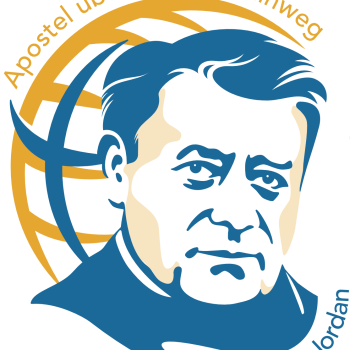
On December 8th, 2024, the Salvatorian Family will celebrate its 143rd anniversary—an extraordinary milestone that marks over a century of dedicated service, missionary work, and unwavering faith. Founded on the Feast of the Immaculate Conception, the Salvatorians have continually embodied their mission: to make the Savior known to all people.

The Founding Vision

The Salvatorians, officially known as the **Society of the Divine Savior (Societas Divini Salvatoris), were founded in 1881 by Father Francis Mary of the Cross Jordan in Rome. Deeply moved by the spiritual needs of his time, Father Jordan envisioned a community of men and women, religious and laypeople, united by the common goal of spreading the message of Jesus Christ. Inspired by the universal call to salvation, he established a mission that transcended borders, languages, and cultures.  

Jordan's vision was clear: 

"As long as God is not glorified everywhere, you dare not allow yourself a moment’s rest." 

This relentless dedication to mission work laid the foundation for the Salvatorians' dynamic and far-reaching efforts across the globe.  

From its humble beginnings in Rome, the Salvatorian mission quickly expanded. Missionaries were sent to various countries, spreading the Gospel and serving communities in need. The early 20th century saw the establishment of missions in Europe, North and South America, Africa, and Asia. Each new region brought unique challenges, but the Salvatorians’ commitment to their charism “to make Jesus known and loved”remained steadfast.  

In 1895, Father Jordan co-founded the Congregation of the Sisters of the Divine Savior (Salvatorian Sisters) with Blessed Therese von Wüllenweber, further expanding the reach of the Salvatorian mission. Laypeople were also invited to participate in the Salvatorian spirit, leading to the formation of the International Community of the Divine Savior (Lay Salvatorians).  

The Salvatorians are known for their versatile and adaptive approach to ministry. Their charism focuses on three core principles:  

1. Proclaiming the Gospel through all means possible.  

2. Serving humanity without distinction, especially the poor and marginalized.  

3. Collaborating as a family, recognizing the unique gifts of priests, sisters, and laypeople.  

Today, Salvatorians serve in over 40 countries, engaging in various ministries:  

- Education: Schools, universities, and adult education programs.  

- Pastoral care: Parish ministries, youth programs, and retreat centers.  

- Social services: Health care, humanitarian aid, and advocacy for justice and peace.  

Significance of the 143rd Anniversary

This anniversary is not merely a reflection on the past but a call to renew the mission and adapt to contemporary challenges. In a world marked by division, materialism, and spiritual hunger, the Salvatorian message remains as relevant as ever.  

As Salvatorians look forward to the future, they continue to draw inspiration from Father Jordan's words: 

“We must adapt ourselves to the times if we want to win all for Christ.” 

The 143rd anniversary is an invitation to all members—priests, sisters, and lay Salvatorians—to recommit to their mission with renewed zeal. It’s a time to celebrate achievements, reflect on challenges, and, above all, envision new ways to make the Savior known.  

In the spirit of collaboration and innovation, the Salvatorian Family will undoubtedly continue to be an encouragement of hope, faith, and service for generations to come. 

Happy 143rd Anniversary to all Salvatorians! May this milestone inspire an even deeper commitment to the mission entrusted by God through Father Jordan.

Our Lady of Guadalupe 12 of December

Our Lady of Guadalupe 12 of December

Our Lady of Guadalupe: A Symbol of Faith, Unity, and Hope

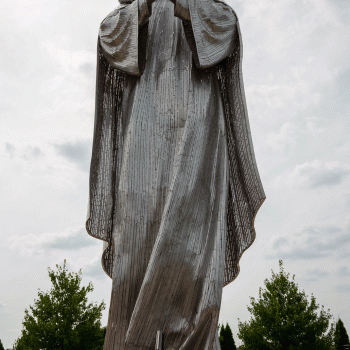
Our Lady of Guadalupe holds a unique and beloved place in the hearts of millions, particularly in Latin America. Her appearance to Saint Juan Diego in 1531 near Mexico City marked a profound moment of faith and cultural transformation, symbolizing divine compassion and a call to unity.

In December 1531, a humble indigenous man named Juan Diego encountered a vision of the Blessed Virgin Mary on the hill of Tepeyac, near present-day Mexico City. She appeared to him with dark skin and features resembling those of the native population, speaking to him in Nahuatl, his native language.

Mary identified herself as the Mother of the True God and asked Juan Diego to request that the local bishop build a church in her honor on the site. The bishop, skeptical of Juan’s story, asked for a sign to prove the authenticity of the apparition.

On December 12th, Mary appeared to Juan Diego again and directed him to gather Castilian roses blooming miraculously on the hillside—a place where flowers were not known to grow in winter. Juan carried the roses in his tilma(cloak) to the bishop. When he opened the cloak, the flowers fell to the floor, revealing a miraculous image of Our Ladyimprinted on the fabric. The bishop, deeply moved, recognized this as a divine sign and ordered the construction of the church.

In an age of division and social challenges, Our Lady of Guadalupe’s message of hope and unity remains profoundly relevant. She reminds us of God’s presence in our lives and calls us to care for the marginalized, protect life, and build a world of justice and peace.

Our Lady of Guadalupe, pray for us!

 The Most Reverend Frederick Bernard Henry - R.I.P

The Most Reverend Frederick Bernard Henry - R.I.P

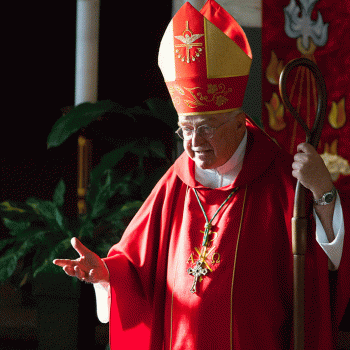
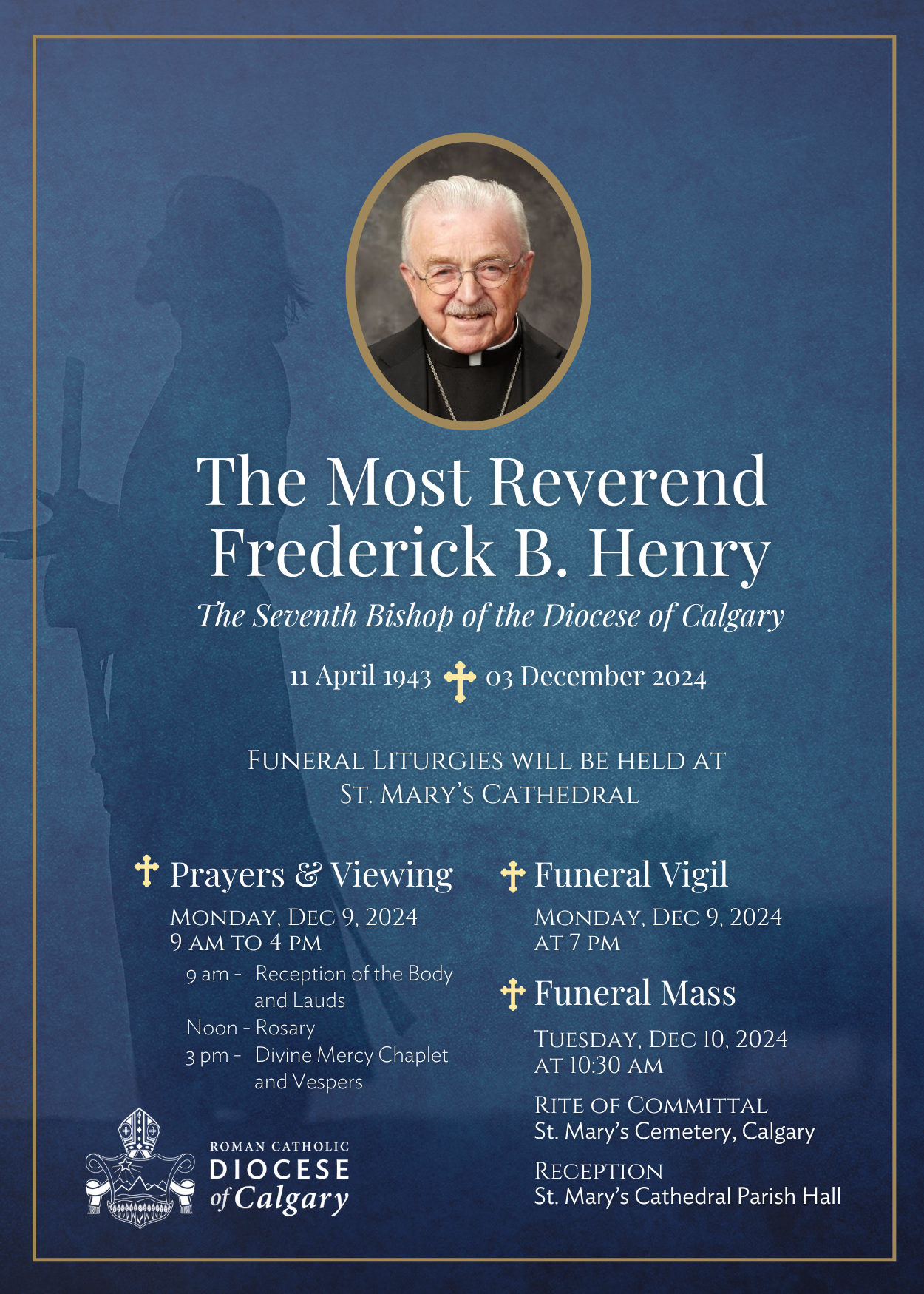
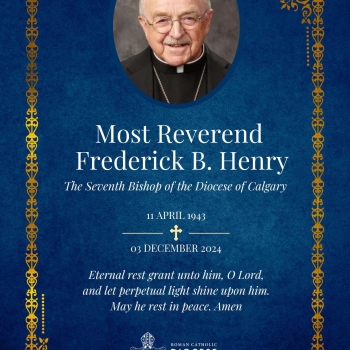
The Most Reverend Frederick Bernard Henry, Seventh Bishop of the Roman Catholic Diocese of Calgary, died on Tuesday, December 3, 2024, at the age of 81 years.
 
In living out his episcopal motto, “Dabo vobis pastores” (I will give you shepherds), Bishop Frederick Henry was a true spiritual father to the laity and the clergy of the dioceses he served.
 
Frederick Bernard Henry was born in London, ON, on April 11, 1943, the eldest of five sons in the family of Leo and Noreen Henry. After finishing high school, he entered St. Peter’s Seminary in London, ON, and was ordained to the Priesthood on May 25, 1968. He served as Associate Pastor of Christ the King Parish, Windsor, ON, before being sent to further his studies.
 
In 1971, he earned a master’s degree in philosophy from the University of Notre Dame, Indiana, and in 1973, a Licentiate in Theology, specializing in Fundamental Theology, from the Pontifical Gregorian University in Rome. Father Henry was an Associate Professor of Theology and Philosophy at St. Peter’s Seminary from 1973 to 1986. He also became Dean of Theology and Rector of St. Peter’s Seminary from 1981 to 1986. As Rector, he oversaw the updating and reorganization of programs in theology and formation, as well as a major addition to the seminary’s library to accommodate its growing collection. He was named a Prelate of Honour by Pope John Paul II in 1985.
 
Frederick Bernard Henry was named Auxiliary Bishop of London and Titular Bishop of Carinola by Pope John Paul II and was ordained to the Episcopate on June 24, 1986. He was installed as the Fourth Bishop of Thunder Bay, ON, on May 11, 1995 and as the Seventh Bishop of Calgary on March 19, 1998. Due to health concerns, his request for an early retirement was granted by Pope Francis on January 4, 2017, after serving as the Bishop of Calgary for 19 years.
 
During his tenure as the Bishop of Calgary, the Diocese experienced significant growth, including several economic downturns and increased immigration. These developments led to the construction of several new churches, the establishment of programs addressing poverty, and the continued expansion of Catholic school divisions. He was known for his strong stance on social justice and life issues, working closely with leaders of other faiths to foster bonds of friendship and mutual understanding, united toward the common good.


Bishop Henry is survived by his brothers, Dave (Sharon), Leo (Maureen), Larry, and Rick (Darryl); 11 nieces and nephews; and 21 great-nieces and nephews.
 
The Reception of the Body will take place on Monday, December 9, 2024 at 9:00 a.m. followed by public visitation until 4:00 pm at St. Mary’s Cathedral (219 18 Ave SW, Calgary, AB). The Funeral Vigil will be celebrated at 7:00 p.m.
 
The Mass of Christian Burial will be celebrated at St. Mary’s Cathedral (219 18 Ave SW, Calgary, AB) on Tuesday, December 10, 2024, at 10:30 a.m., with the Most Reverend William T. McGrattan as principal celebrant. The Rite of Committal will take place at St. Mary’s Cemetery (3157 Erlton St SW, Calgary, AB). A reception will follow in St. Mary’s Parish Hall (221 18 Ave SW, Calgary, AB).


The 9:00 a.m. Mass on Monday, December 9 at St. Joseph Parish will be offered for Bishop Henry. 

Address

206-9th Avenue West
High River, AB T1V 1A4

Talk to us

(403) 652 2203
(403) 601 3886