About

Parish News

The Life and Significance of St. Scholastica

The Life and Significance of St. Scholastica

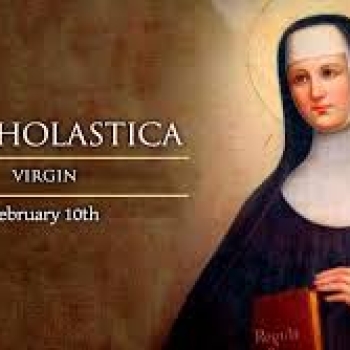
On February 10 (Monday), the Church celebrates the Memorial of Saint Scholastica, a virgin whose life exemplifies pure love and service to God. As we honor her, we ask for the grace to follow her example, "that, following her example, we may serve you with pure love and happily receive what comes from loving you" . St. Scholastica, the twin sister of St. Benedict, is a guiding light for Benedictine nuns and a powerful intercessor for all who seek a deeper relationship with God.

St. Scholastica's life was marked by a profound dedication to God from her earliest years. The historical records reveal that "she had been dedicated from her infancy to Our Lord" . Her close bond with her twin brother, St. Benedict, further shaped her spiritual journey. They shared not only a familial connection but also a deep commitment to seeking God's will in their lives. Scholastica would visit Benedict once a year, meeting "not far from the gate to a place that did belong to the abbey, there to give her entertainment" .

St. Scholastica's most significant contribution to the Church was her role in establishing the first Benedictine community for women. Because she "was the twin sister of St. Benedict, the founder of the Benedictine monastic tradition, and dedicated her life to following the same spiritual ideals of prayer, community, and hospitality," she is the patron saint of Benedictine nuns. She embraced the Benedictine rule, mirroring her brother's dedication to a life of prayer, contemplation, and service. Her leadership and spiritual insight provided a foundation for female monastic life that continues to inspire women today.

One of the most memorable stories of St. Scholastica's life is her last visit with St. Benedict. As the narrative goes, "The sister begged her brother to stay the night, but by no persuasion would he agree unto that, saying that he might not by any means tarry all night out of his abbey"]. Scholastica, filled with a desire to continue their spiritual conversation, knelt in prayer. In response, "there fell suddenly such a tempest of lightening and thundering, and such abundance of rain, that neither venerable Bennet, nor the monks that were with him, could put their head out of door". This miraculous event demonstrated the power of her prayer and her deep connection with God, compelling Benedict to remain and continue their sacred dialogue.

St. Scholastica's death was as remarkable as her life. Three days after their final meeting, "Benedict beheld the soul of his sister, which was departed from her body, in the likeness of a dove, to ascend into heaven". Overjoyed at the sight of her glory, Benedict informed his monks and arranged for her body to be brought to his abbey. She was buried in the tomb he had prepared for himself, symbolizing their inseparable bond and shared devotion to God.

St. Scholastica holds a special place in the Catholic Church as the patron saint of Benedictine nuns. "Her deep devotion to God, combined with her close relationship with her brother, symbolized a shared spiritual mission and a commitment to the contemplative, disciplined life that defines the Benedictine order. Her role as a spiritual leader for women makes her a fitting patron for Benedictine nuns". Her life exemplifies the virtues of prayer, obedience, and a relentless pursuit of God, making her an inspiring figure for all believers.

St. Scholastica's life offers a powerful model for all Catholics striving for holiness. Blessed Nemesia Valle's words remind us that "Holiness does not consist in doing many things or great things.... Those who entirely spend themselves each day, wherever they are, for the Lord, are holy". St. Scholastica teaches us the importance of dedicating our lives to God through prayer, service, and a deep commitment to His will. Like Saints Benedict and Scholastica, each community is called to create a “God-enlightened space in which to experience the hidden presence of the risen Lord”.

In conclusion, St. Scholastica's life is a testament to the transformative power of faith and dedication. "In her passionate love for Jesus, who led her on a path of intense prayer and torment and to identify herself increasingly with the mystery of the Cross, she offers us an attractive witness and a perfect example of a life totally dedicated to God and to her brothers and sisters". As we celebrate her memorial, let us strive to emulate her virtues, seeking a deeper relationship with God through prayer, service, and a commitment to living out His will in our daily lives.

O Mary, Queen of All Saints, pray for us that we may follow the example of St. Scholastica and grow in love and service to your Son.
World Day of the Sick 2025: A Time for Compassion and Healing

World Day of the Sick 2025: A Time for Compassion and Healing

On February 11, 2025, the global Catholic community will once again observe the World Day of the Sick, a day dedicated to prayer, reflection, and acts of compassion for those who are ill and for the caregivers who accompany them in their suffering. Established by Pope Saint John Paul II in 1992, this day coincides with the Feast of Our Lady of Lourdes, a fitting tribute to the healing and hope associated with the Marian shrine in Lourdes, France.

Theme for 2025: "Caring for the Whole Person"

The Vatican’s theme for this year, "Caring for the Whole Person," emphasizes the need to address the physical, emotional, and spiritual dimensions of illness. This theme reminds us that true healing goes beyond medical intervention and extends into the realm of human connection and spiritual nourishment.

In his message for the occasion, Pope Francis highlights the importance of seeing each sick person as an individual with dignity and worth, deserving of attentive care and love. He calls on healthcare professionals, families, and faith communities to prioritize compassionate service and holistic care, inspired by the example of Jesus Christ, who tended to the sick with mercy and tenderness.

The Role of Our Lady of Lourdes

The connection to Our Lady of Lourdes is profound. Since 1858, Lourdes has been a place of healing and miracles, where millions of pilgrims seek physical and spiritual restoration. The Virgin Mary appeared to Saint Bernadette Soubirous, bringing messages of prayer and repentance, and today the shrine remains a symbol of hope for the suffering.

For this reason, many parishes and dioceses mark the day with special Masses, anointing of the sick, and prayers for healing.

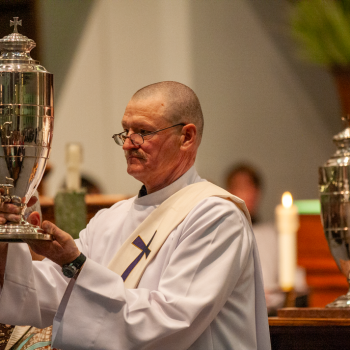
In our parish, we will have a special Mass dedicated to those who are sick and those who care for them. This Mass will be held on Tuesday, February 11, at 7:00 PM. We invite everyone to join us in prayer and solidarity. Please come if you can!

Gratitude for Our Parish Pastoral Care Team

I would like to extend my sincere thanks to our Parish Pastoral Care Team for the tremendous work they do in being present for those who are sick, homebound, or alone. They are truly the angels of hope for our parish, offering comfort, companionship, and love to those in need. Their dedication reflects the heart of Christ’s mission, and we are deeply grateful for their service.

A Call to Action for the Faithful

World Day of the Sick serves as a reminder of the Gospel mandate to care for the least among us. It calls us to:

  1. Pray for the Sick – Offer prayers for those suffering from illness and for the medical professionals who care for them.
  2. Visit and Comfort – Reach out to friends, family members, or parishioners who are sick or isolated. A kind word or gesture can uplift their spirits.
  3. Support Caregivers – Recognize the vital role of caregivers, whether professionals or family members, and offer them encouragement and practical help.
  4. Advocate for Healthcare Justice – Advocate for equitable access to quality healthcare for all, especially for the marginalized and underprivileged.

Events Around the World

This year, many Catholic hospitals, charities, and parishes worldwide will hold events such as health fairs, free medical check-ups, and seminars on pastoral care for the sick. In addition, Pope Francis will preside over a special Mass at the Vatican, offering prayers for those suffering in body, mind, and spirit.

Conclusion

The World Day of the Sick invites all of us, whether or not we are directly affected by illness, to deepen our commitment to love and serve one another. It challenges us to bring hope, comfort, and healing into the lives of those who suffer, following the example of Christ, who is the divine physician of both body and soul.

As we reflect on this day, may we renew our resolve to become instruments of God’s mercy, working together to build a world where every person receives the care, respect, and compassion they deserve.

The Presentation of the Lord

The Presentation of the Lord

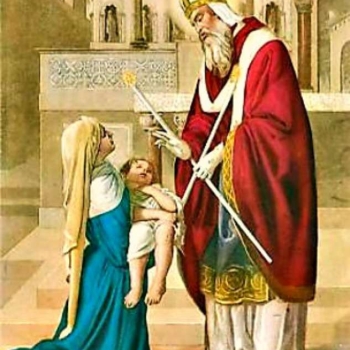
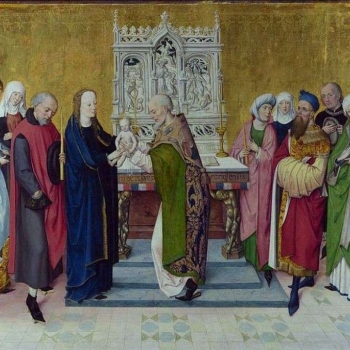
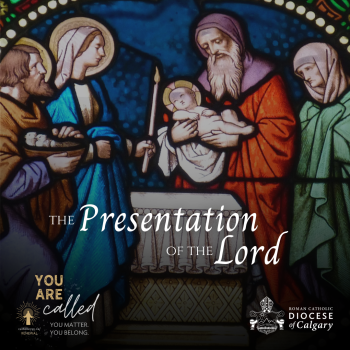
The presentation of the infant Jesus is the fulfillment of Malachi’s prophesy about the Lord entering the Temple – but he comes not in power and might, but as an infant in the arms of his mother. The passage shows the poverty of the little family (the offering of turtledoves for the mother’s purification sacrifice after childbirth is described in Leviticus 12: 6 as being appropriate for those who cannot afford a lamb). It also shows their piety: Jesus is being raised in a faithful Jewish family, consecrated to the Lord according to the Law. In this beautiful passage, Luke introduces us to two people who represent all those who have longed for the Lord for many, countless, long generations – all those who have been waiting for the Messiah to bring salvation to the People of God. Simeon and Anna place all their hope in God: this elderly man and this elderly woman are both people of prayer, full of faith. Both are given knowledge of the true identity of Jesus. Simeon is also given insight into the passion and suffering that lies ahead, and the sorrow that will pierce the heart of Mary. 

  1. Mary and Joseph bring Jesus to the Temple for a ritual purification and consecration. Today’s world often views ritual and liturgy as unnecessary or meaningless. What is the value of this sort of ritual to mark an important “life moment”? 
  2. Where do you see evidence of both the humanity and the divinity of Jesus in this passage? 
  3. The Feast of the Presentation of Jesus in the Temple has been chosen by the Church as the Day of Consecrated Life – a day of prayer and recognition of all those who have taken vows of poverty, chastity and obedience in consecrated religious life. How does this Gospel passage speak to that vocation?
    (Reflection: Diocese of Saskatoon)
Blessing of Throats

Blessing of Throats

The blessing of throats is a tradition in the Catholic Church, usually celebrated on February 3, the feast of St. Blaise. For those interested, a blessing of throats will take place during Mass on Monday morning.

Blessing of Candles

Blessing of Candles

As the Presentation of the Lord falls on this Sunday, February 2, there will be a blessing of candles during all Masses this weekend. Please feel free to bring your candles from home if you would like to have them blessed.

he 80th Anniversary of the Liberation of the German Nazi Concentration Camp Auschwitz

he 80th Anniversary of the Liberation of the German Nazi Concentration Camp Auschwitz

January 27, 2025, marks the 80th anniversary of the liberation of the German Nazi concentration camp Auschwitz by the Red Army. This is one of the most significant events in the history of the 20th century, reminding us of the tragedy of millions who fell victim to the atrocities of the totalitarian regime. This day has been established as International Holocaust Remembrance Day to ensure the world never forgets this human tragedy.

The Auschwitz concentration camp was established by the German Nazi authorities in May 1940 in Oświęcim, Poland. Initially, it was intended to detain Polish political prisoners, but over time, it became one of the main centers for the extermination of Jews, Roma, prisoners of war, and other groups deemed enemies of the Third Reich. The camp operated for nearly five years, until January 1945. It is estimated that approximately 1.1 million people were murdered in Auschwitz, including around 1 million Jews, 70,000 Poles, 21,000 Roma, and prisoners of other nationalities.

Father Maximilian Maria Kolbe

In Auschwitz, St. Maximilian Maria Kolbe, a Franciscan friar, gave his life and earned the title “Martyr of Love.” Father Kolbe, born in 1894 in Zduńska Wola, was a man of deep faith, devoted to the Virgin Mary, and actively involved in the development of the Militia Immaculatae movement. During the war, he was arrested by the Gestapo for helping Jews and Polish refugees.

In July 1941, Kolbe voluntarily offered his life in exchange for a fellow prisoner, Franciszek Gajowniczek, who had been condemned to death by starvation. His heroic act of love and sacrifice for another became a symbol of hope and the triumph of good over evil. In 1982, Maximilian Kolbe was canonized by Pope John Paul II as a martyr.

Edith Stein and Rosa Stein

Edith Stein, also known as St. Teresa Benedicta of the Cross, was a prominent philosopher and Jewish woman who converted to Catholicism. Born in 1891 in Wrocław, she was one of the most significant students of Edmund Husserl, the founder of phenomenology. Her spiritual journey led her to the Catholic Church, where she became a Carmelite nun.

In 1942, Edith and her sister Rosa, who also converted to Catholicism, were arrested by the Gestapo in the Netherlands due to their Jewish heritage. In August of the same year, the sisters were deported to Auschwitz, where they perished in the gas chambers. Edith Stein was canonized in 1998 by Pope John Paul II and proclaimed a co-patroness of Europe in 1999.

Angela Maria Autsch – “The Angel of Auschwitz”

In 1944, Angela Maria Autsch, a nun from Westphalia known as “The Angel of Auschwitz,” also perished in Auschwitz. “Angela came to this house of madness like the smile of dawn, like a ray of sunshine. Amidst the terrible suffering, she created an island of tenderness,” wrote a Jewish doctor, herself a prisoner in the concentration camp, about the work of Sister Angela of the Sacred Heart of Jesus. The beatification process for Sister Angela Autsch is ongoing.

Sinti and Roma Victims

The Holocaust also claimed the lives of Sinti and Roma people. Like the Jews, they were first deprived of their rights and then murdered. In December 1942, a “Gypsy camp” was established at Auschwitz. Few people know that 90% of the deported Roma and Sinti were Catholics. Recently, the Archbishop of Munich, Cardinal Reinhard Marx, acknowledged the moral failure of the Church leadership in the Archdiocese of Munich and Freising in helping Sinti and Roma during the Nazi dictatorship.

Memory and Message

The anniversary of Auschwitz’s liberation is a time for reflection on history and responsibility for the future. The testimonies of figures such as St. Maximilian Kolbe, St. Edith Stein, her sister Rosa, and Sister Angela Autsch teach us that even in the darkest moments, we can remain faithful to the values of love, faith, and solidarity.

Looking at today’s global conflicts, we often forget about past genocides and human tragedies. Therefore, it is all the more important for us, as Catholics and people of goodwill, to remind not only younger generations but also ourselves about these events.

May this anniversary remind us of the need to build a world based on respect for every human being, regardless of nationality, faith, or origin. "Never again"—this call must resonate in our hearts and actions.

Address

206-9th Avenue West
High River, AB T1V 1A4

Talk to us

(403) 652 2203
(403) 601 3886